Resources
Articles
Guides and reference reading on South Dakota pheasant hunting — self-guided hunting, gun dogs, wild game recipes and getting the most from your trip. For current season updates, harvest reports and open-hunt announcements, see News & Events.
September 30, 2026
Ultimate Self-Guided South Dakota Pheasant Hunting Schedule
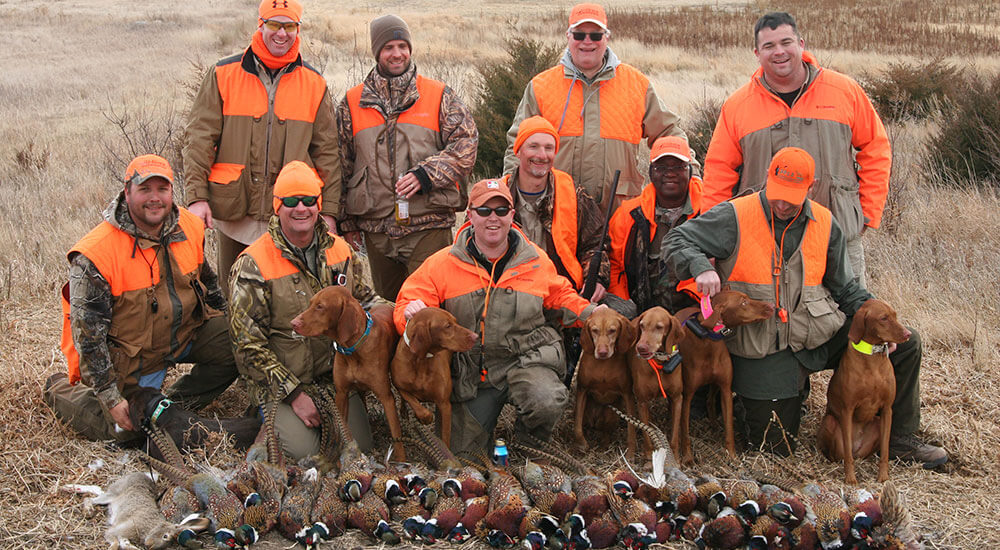
Originally written by Chris Hitzeman. A reference guide for understanding how UGUIDE's season schedule is built, so hunters can plan their trip with confidence. The dates found on the UGUIDE Availability page have taken many years to develop. They are the most optimized dates per week, not only for hunters, but for the Owner Outfitters as well. Feedback received by UGUIDE over 10+ years has gone into the development of the Annual UGUIDE Pheasant Hunting Season Schedule. Below is a discussion of the dates of each week in the season schedule and their value and significance, to help you understand our system better. Schedule Variables That Affect Every Week A few things have come up over the years that can cause scheduling conflicts between Owner Outfitters, hunters and UGUIDE: Opener dates shift based on the 3rd Saturday start in October — one year the opener might land on the 15th, the next on the 21st. Just the shifting of these dates can affect everyone's calendar. South Dakota Game, Fish & Parks sets these dates; UGUIDE does not. The Thanksgiving holiday switches between Week 6 and Week 7 every several years. Hunters who prefer the holiday week are usually able to switch with the group in the non-holiday week when that happens, and UGUIDE facilitates this. First right of refusal follows the week the holiday falls in: if the holiday is in Week 6 this year and moves to Week 7 next year, you'll have right of refusal on Week 7, and the reverse is also true. Days of rest between groups matter more than they might seem — what happens between Weeks 1 and 2 can affect the quality of every group's hunt for the rest of the season. Each week's dates are set to maximize rest between groups. Owner Outfitters need time between groups to clean the lodges — typically one day isn't enough, so two days are built in, both for cleaning and for resting the birds. Hunter schedules — families, other states' hunting seasons, and personal preferences — also factor into potential conflicts with the season schedule. Check-in and check-out times are always after 3:00pm the evening before your first hunting day, and before 10:00am the morning after your last hunting day. Hunting days each week: the date range shown for each week on the Availability page is the range of days you can select from, not your actual hunting days. Your hunting days default to the back half of each week's range, to give you the most rest ahead of your hunt. You can move your days earlier within that range if you'd like. Week 1 — Season Opener Shooting begins at 10:00am all season. Game, Fish & Parks sets the opener date, so check-in is after 3:00pm the Friday night before the Saturday morning opener — usually 10:00am the 3rd Saturday in October. On a 3-day hunt, checkout is before 10:00am Tuesday morning; on a 4-day hunt, checkout is Wednesday morning. Week 2 — 1-3 Days of Rest Thursday night check-in, hunt Friday through Sunday, checkout Monday morning. A 4-day hunt is a Wednesday check-in, starting to hunt Thursday. Days of rest are compressed but less of a factor this early in the season — each camp is assessed on habitat and bird numbers to determine if it can sustain 4-day hunts this week. Week 3 — 2-3 Days of Rest Your 3 or 4-day hunt can start as early as Wednesday, with your last hunting day as late as Saturday. Checkout is always Sunday morning. Week 4 — First Full Week, 3-4 Days of Rest Your 3 or 4-day hunt can start as early as Tuesday, with your last hunting day as late as Saturday. Checkout is always Sunday morning. Week 5 — Full Week, 3-4 Days of Rest Your 3 or 4-day hunt can start as early as Tuesday, with your last hunting day as late as Saturday. Checkout is always Sunday morning. Week 6 / 7 — Thanksgiving Holiday Week Thanksgiving falls in Week 7 more often than Week 6, and UGUIDE works to facilitate a switch between the two weeks when the holiday moves. In years when the holiday falls in Week 7, the Week 6 schedule runs like a normal week: a 3 or 4-day hunt starting as early as Tuesday, last day as late as Saturday, checkout Sunday morning. Whichever week holds the holiday, groups can check in as late as the Friday after Thanksgiving, start hunting Saturday, and check out as late as Tuesday — so families can spend the holiday together. 4-day hunts check in and start earlier in the week. The non-holiday week runs closer to a normal schedule. Week 8 — Late Season Opener, 2-4 Days of Rest Called the "late season opener" because by now the crops are typically out and the first skiff of snow has usually arrived, with temps below freezing. Birds bunch up and push into heavier cover. Your 3 or 4-day hunt can start as early as Wednesday, with your last hunting day as late as Sunday. Checkout is always Monday morning. Week 9 — Season End, 3+ Days of Rest This week offers some unique opportunities depending on where it falls on the calendar. There are usually no groups hunting after Week 9, so UGUIDE can often accommodate a later starting date for more rest days, and there's flexibility to adjust around major weather. South Dakota GF&P also offers a half-price hunting license if purchased on or after December 15th. The earliest hunting day start in this week is Wednesday. Other Considerations As you can see, scheduling UGUIDE hunts is complex. Because of that, we ask that all scheduling be facilitated through UGUIDE rather than directly through the Owner Outfitters. The same level of diligence goes into our pricing and discount system, our online quote and reservation process, and — most importantly — our habitat development work. We hope this helps you plan your trip with confidence, and we hope to see you in the fields of South Dakota.
Read More »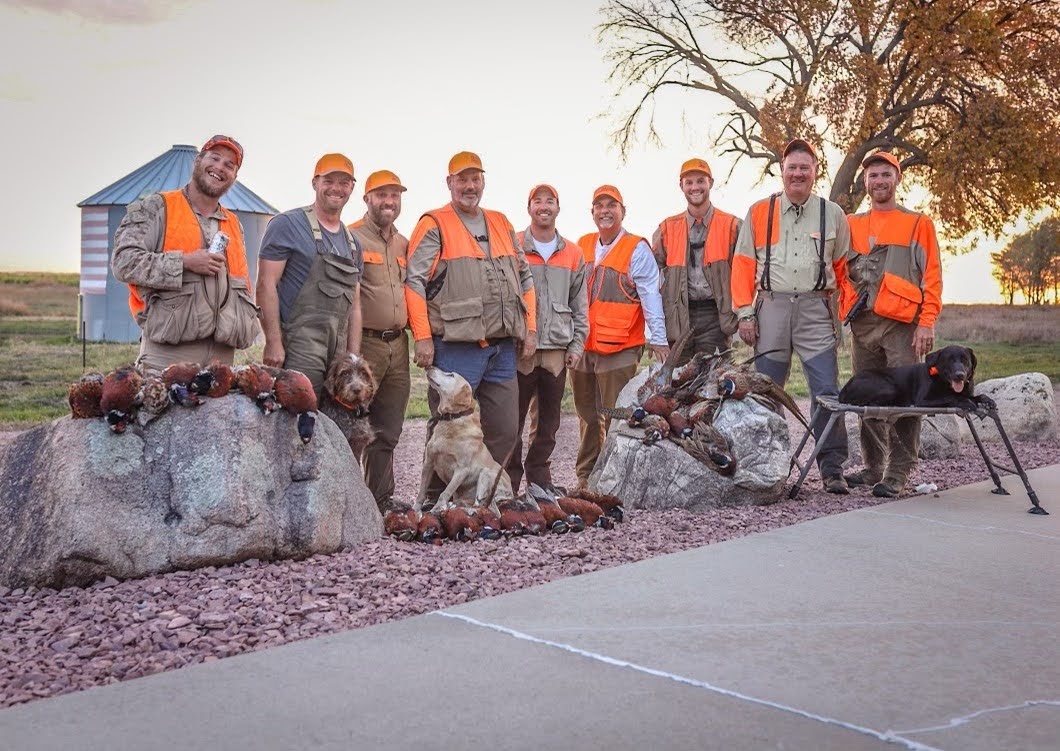
October 7, 2026
Your Next South Dakota Pheasant Hunting Vacation
What sets South Dakota apart as a pheasant hunting destination: soil, habitat, CRP acres and land prices. Originally written by Chris Hitzeman, published May 1, 2007. Destination: South Dakota, the King of Pheasant Hunts So if you're like me, you grew up saving for shells, license fees and gas to get you to your favorite pheasant hunting "spot". That "spot" may have been a road ditch, public ground, railroad track, bridge overpass or any other place that you might think a pheasant would hide. If you were lucky you might have met and developed a relationship with a farmer who was nice enough to let you hunt on his private land. Once you've done that for 20 years and you go through a few years when the pheasant shooting ain't real good, it doesn't take the mind long to start to wonder if there are any better places to hunt pheasants than your usual local haunts. UGUIDE receives many calls and guests from the Midwest. States like Wisconsin, Illinois, Iowa, Michigan, Minnesota and Indiana are probably the most common origination points for a South Dakota pheasant hunting vacation. I suspect that the sad but true driver behind that growth is that what one day used to be great pheasant hunting has dwindled to a below average pheasant hunting experience in those states. The price of farmland has gone up dramatically in those states in recent years and one can only speculate that farmers who were once able to "leave a little for the pheasants" can no longer afford to do that. Seems that there is a relationship between skyrocketing land prices and farmland cash rents, and the result is plummeting pheasant populations. What Sets South Dakota Apart I'm not sure what the magic is behind South Dakota's seasonally high pheasant populations, but a few factors separate this state from the rest. Soil types: South Dakota's soil has high lime content, which is supposedly good for nesting and hatching brood. Habitat cash flow: South Dakota dominates the commercial fee hunting business and that means farmers can afford to "leave a little" for the pheasants. Heck, they can afford to leave a lot! Habitat is everything. CRP acres: Any state that has high CRP acres is where you will find the birds, plain and simple. South Dakota has them. North Dakota has them too, and that is no surprise why North Dakota is a sister state to South Dakota when it comes to being the king of pheasant destinations. Land prices, rents and "dirty" farming: Thank God that some land in South Dakota just ain't real good for farming. When farm ground is not as productive and rents are lower, then of course land prices are lower and the farmers aren't as bent on farming up to the fence lines or trying to plow under wetlands, sloughs or weedy areas to get them to pay. A State With a Pheasant Culture South Dakotans have long enjoyed the tourism business associated with their remote destination. For the most part they really enjoy pheasant hunters and pheasant hunting, but the majority of resident farmers are not avid pheasant hunters. Now deer hunting, that is a whole different story. I think it makes a big difference that pheasant hunting, and the business of hunting pheasants, has been in the culture of the state for so many years. Bottom line: if you love to pheasant hunt, and that look in your dog's eye is making you feel guilty about not getting him on more real wild birds, then you should look into making your next wild pheasant hunting vacation destination South Dakota.
Read More »
October 7, 2026
Operation Pheasant Storm
A military-based approach to hunting South Dakota pheasants: a role-based tactic for groups working late-season birds. Originally written by Chris Hitzeman, published April 5, 2007. Where the Idea Came From If you've never been pheasant hunting in South Dakota, you might not understand the value of the tactics I'm about to describe. Having grown up pheasant hunting in the state of Iowa, I got used to losing birds out the end when hunting with small groups, and late season birds running up ahead with your shorthairs in hot pursuit. If I had a dime for every time the dogs would flush significant quantities of birds up at several hundred yards out of range, I'd be rich. After walking all day, the frustration factor could get high. Maybe I'm narrow on this, but my respect for the craftiness and cunning of a truly wild mature ringneck is so high that, as long as the sole hunter and huntee are in the field void of motor vehicle and radio use, any legal tactic is ethical when it comes to bagging native wild pheasants. If you think different, you might not have attempted to get up on a couple hundred pheasants (that's 400 eyeballs) in a stripped out cornfield in mid December. When you witness several dozen roosters flushing way out of range ahead of you, you'll think "fair chase" is anything but fair. That was my experience while hunting this last fall of '06 near Choteau Creek, South Dakota, in a half section of CRP and stripped corn. We weren't totally familiar with all the cover on the ground and didn't quite know how to hunt the parcel. We had about 10 guys and about half a dozen dogs. We opted to enter the field from the south, walking into the wind in one big line abreast. As soon as we entered the field, birds started lifting out of the cover ahead of us, pheasant after pheasant flushing just out of range. This continued for about ¼ of the way down the field. The frustration factor started setting in. This isn't what we came to do. Seeing birds is great but getting some is OK too. One of our issues was that no one person was leading the group in the hunting effort. Finally guys just started trying to run and get up ahead of the birds and get around them. Some guys ran up to block where a section of standing corn came to an end, and others started to get way out to the sides in an effort to flank the birds. The dogs were working scent everywhere in the cover. They knew what to do. Suddenly, birds started flushing away from the blockers and flankers and started flying back over the walkers. The birds were confused and disoriented. Within 5 minutes I had added 3 roosters to my game bag, and with all the shooting I wasn't sure what fell to the other guns. By the time we got out of that field we had put up nearly 1000 pheasants and had pushed maybe half the huntable cover. When you have this many birds in an area, your traditional small-group walk and flush/point strategy just does not produce results. Even pheasants can have safety in numbers. Out of this experience my hunting partner, Ryan Trask from Ultimatepheasanthunting.com, and I came up with a name for this guerrilla-like tactic we had developed for bagging these late season wily roosters: Operation Pheasant Storm. How It Works I'll use a model approach so you can tailor this to any size group. Suffice it to say that the smallest size group I would ever contemplate heading to South Dakota with is 4 hunters. A group size of 6 is better and 10 might be just the ticket. I also like bringing the concept of "role based" hunting into the pheasant fields. It adds safety, if nothing else, and also productivity while reducing confusion and increasing the overall hunt experience. Here are the 4 roles you must employ in this model: Lead: Usually one of the Walkers, elected to organize the group and the roles and to decide how to deploy the model on the particular piece of cover being hunted. Walker(s): Hunters with dogs assigned to push cover where birds are believed to be, and push or flush birds to blockers or flankers. 20-40% of your group should be Walkers. Blocker(s): Hunters with or without dogs assigned to stand at the end of the cover being hunted, in an effort to prevent birds from flushing prematurely and either hold them in cover until the rest of the Walkers and Flankers arrive or get the birds to flush back over the Walkers and/or Flankers. 20-40% of your group should be Blockers. Flanker(s): Hunters "without dogs" assigned to move with the Walkers but to be up ahead of the Walkers and their dogs on both the right and left sides of the cover being pushed. If you have more than 2 Flankers, additional Flankers should be positioned 50-100 yards ahead of the initial Flankers. Continue this positioning for as many pairs of Flankers as you have, depending on your group size. The role and goal of the Flankers is to become visible to the birds trying to escape the cover being pushed and to force them back into the cover and hold them for the Walkers and their flushing/pointing dogs. The Flankers' job is to "fill the gap" between the Walkers and the Blockers. If you are hunting a food plot that is 200' wide and ½ mile long, this is a tall order; 40-60% of your group should be Flankers. Setting Up a Group of Six Once you've determined who in your group is doing what (good luck), the Walkers and Flankers will organize on the downwind end of the cover and the Blockers will take the vehicles down to the upwind side. That way you'll be set to head to your next hunt when this walk is over. Let's assume this group size is 6: 2 will walk, 2 will block and 2 will flank. At the head of the cover where the Walkers will start, organize the Flankers to be 50 yards ahead of the Walkers and 50 yards wide to the right and left of the furthest Walker. If you had 2 more Flankers, you would position them 50-100 yards in front and 50 yards wide of the initial Flankers on the right and left sides. Once the hunt is started, the Walkers and all Flankers maintain their positioning while "marching" down the field, much like that of a marching band. The birds will respond to your positioning and will flush wherever "you are not". The Flankers are largely responsible for adjusting their spacing in an effort to fill in the gaps where birds are not presenting a take-able shot. The Lead is responsible for barking out commands as to when the Walkers and Flankers need to adjust. Hand signals are best if at all possible, as stealthy tactics are preferred over noisy ones. Well, if you're not from South Dakota these probably aren't the tactics you grew up hunting pheasants with. However, when hunting pheasants in South Dakota this may be one strategy to deploy when bird numbers are high or concentrated and wild! Good luck, and let me know how it works! For a closer look at the role-based approach, see Role Based Pheasant Hunting: Walkers, Blockers and Flankers Explained.
Read More »