
Published September 14, 2026
Updated September 14, 2026
Role Based Pheasant Hunting: Walkers, Blockers and Flankers Explained
When the birds are laughing at you — get your game on.
Originally written by Chris Hitzeman in 2007, updated 2026.
If you're like me, you've watched skittish pheasants evade your pursuit from way farther away than you'd like. After the cost of gas, license, shells, dogs, food, guns and gear, it's fair to want to see some birds actually go in the bag.
It's worth arguing what fair chase is and isn't, but when it comes to crunch time, it's nice to have a plan — especially hunting South Dakota's native wild pheasants. South Dakota pheasants get hunted harder than any game bird in any other part of the country. A two-year-old rooster that survived last season is a genuine PhD bird. You need a plan.
Enter role-based pheasant hunting. Wandering a sunny October field with your favorite dog ranks high on anyone's list of favorite things to do — but once you're dealing with hundreds of wild, wised-up birds, that walk in the park turns into a frustrating one fast.
Split your group into three roles: Walker, Blocker or Flanker.
Walkers are generally the hunters with the dogs, and anyone who enjoys walking cover. Blockers deliver the walkers and flankers to their positions, then head to the far end of the field to take up their posting spots — often the guys who can't walk like they used to, and the ones running the vehicles to keep everyone moving efficiently. Flankers tend to be the younger, more mobile hunters in the group. They cover the gaps between walkers and blockers, generally starting alongside the walkers, and need to be able to close a gap fast when birds start leaking out.
Take a piece of cover about the size of a football field, but two to three times as long. With a group of 6, I'd suggest 2 walk, 2 flank, 2 block. With 10, add 2 more blockers and 2 more walkers — or, depending on how the birds are reacting, add flankers further outside the existing ones and a walker/blocker each.
Walkers keep the birds moving toward the blockers, controlling their pace so they aren't walking over birds. Flankers stay positioned roughly 100 yards up and 100 yards out from the walkers on the outside edges of the cover. Blockers surround the end of the cover being hunted — with enough manpower, outside blockers can work like reverse flankers, positioned 100 yards or so out from the nearest end blocker.
Once the hunt starts, everyone needs to understand their impact on the cover. Flankers adjust gaps to pin birds down so the walkers and dogs can work them up. Wild birds that feel surrounded will hold; birds that spot a gap will expose it and fly off unscathed.
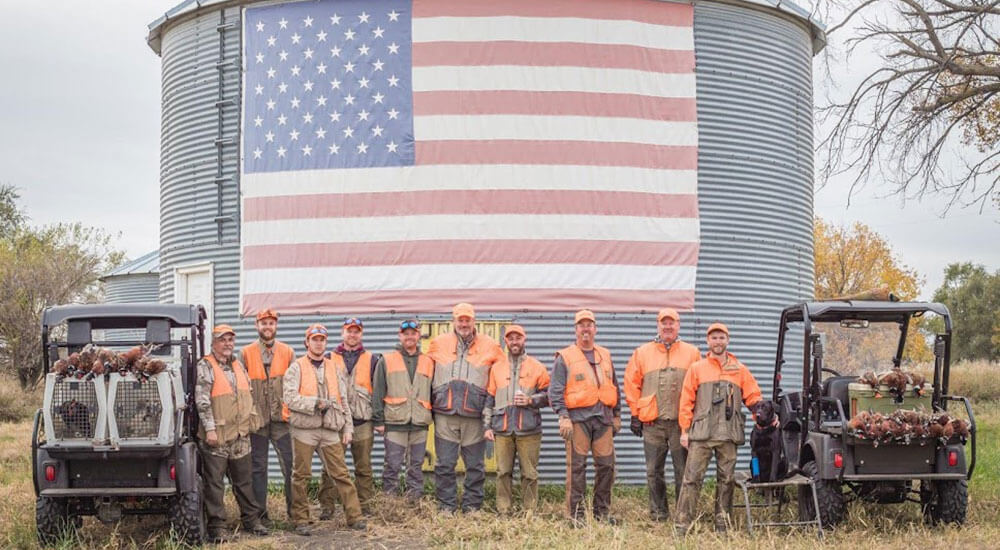
In groups of 4-12 you can decide which roles need staffing and adjust from there. Groups of 6-10 are the ideal size for most hunting situations in South Dakota — which is exactly the range UGUIDE builds its camp minimums and group pricing around.
Building a group of 6-10? See current UGUIDE rates and group pricing.